PIXERA Connects Content, Cameras and Show Control for Sarah Connor
514 square meters of LED surfaces, 13 server outputs, and a tightly integrated workflow for a flexible touring production
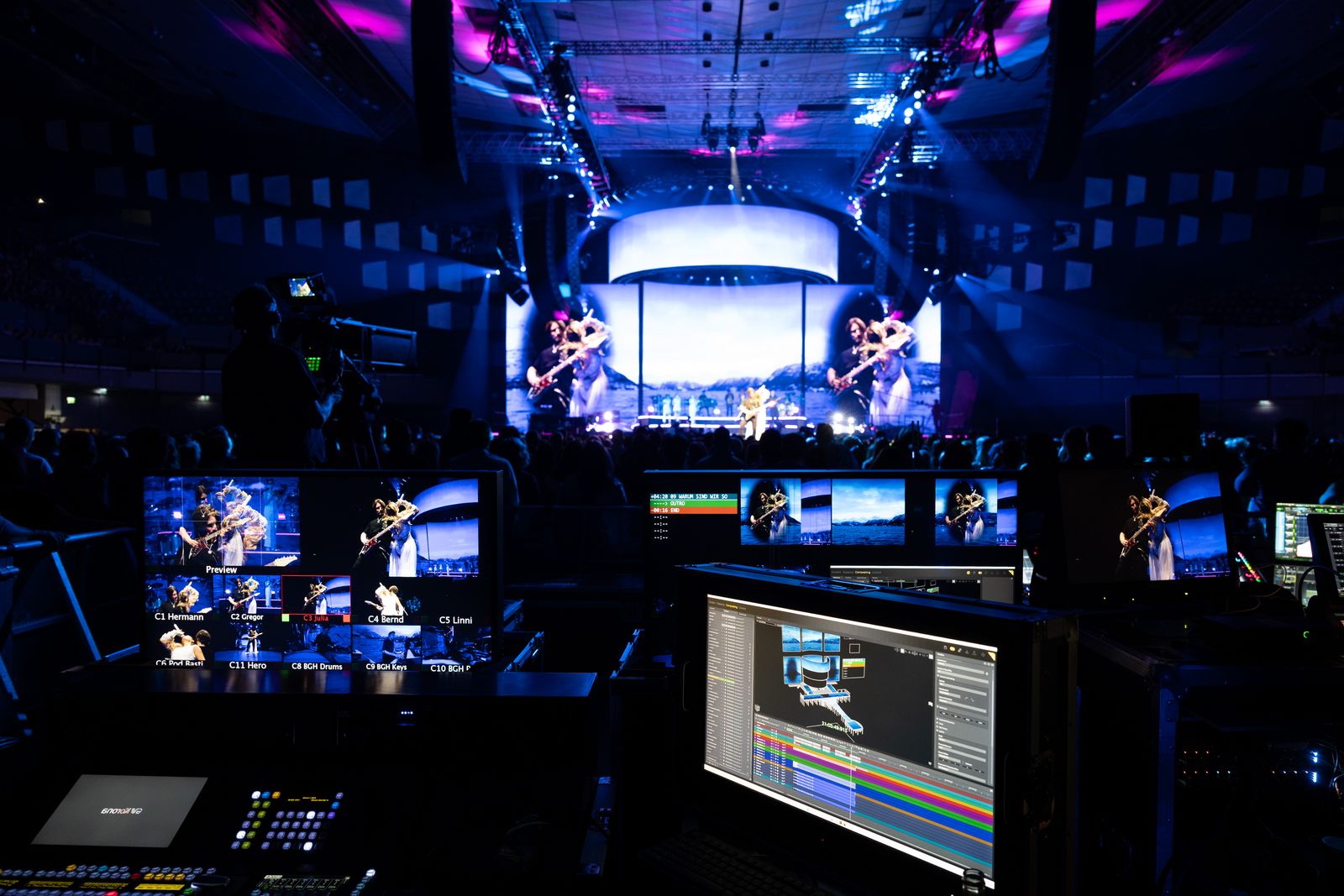
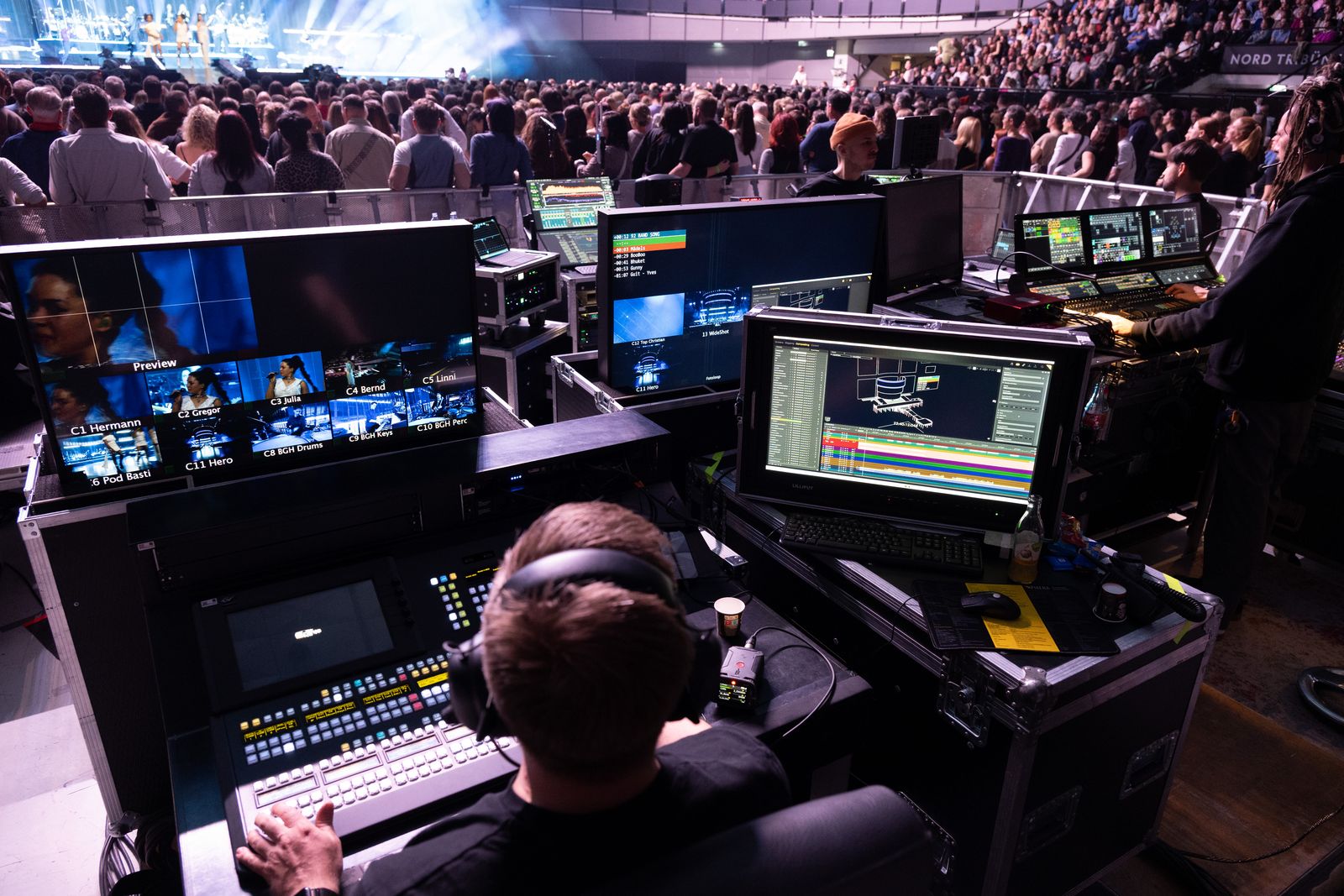
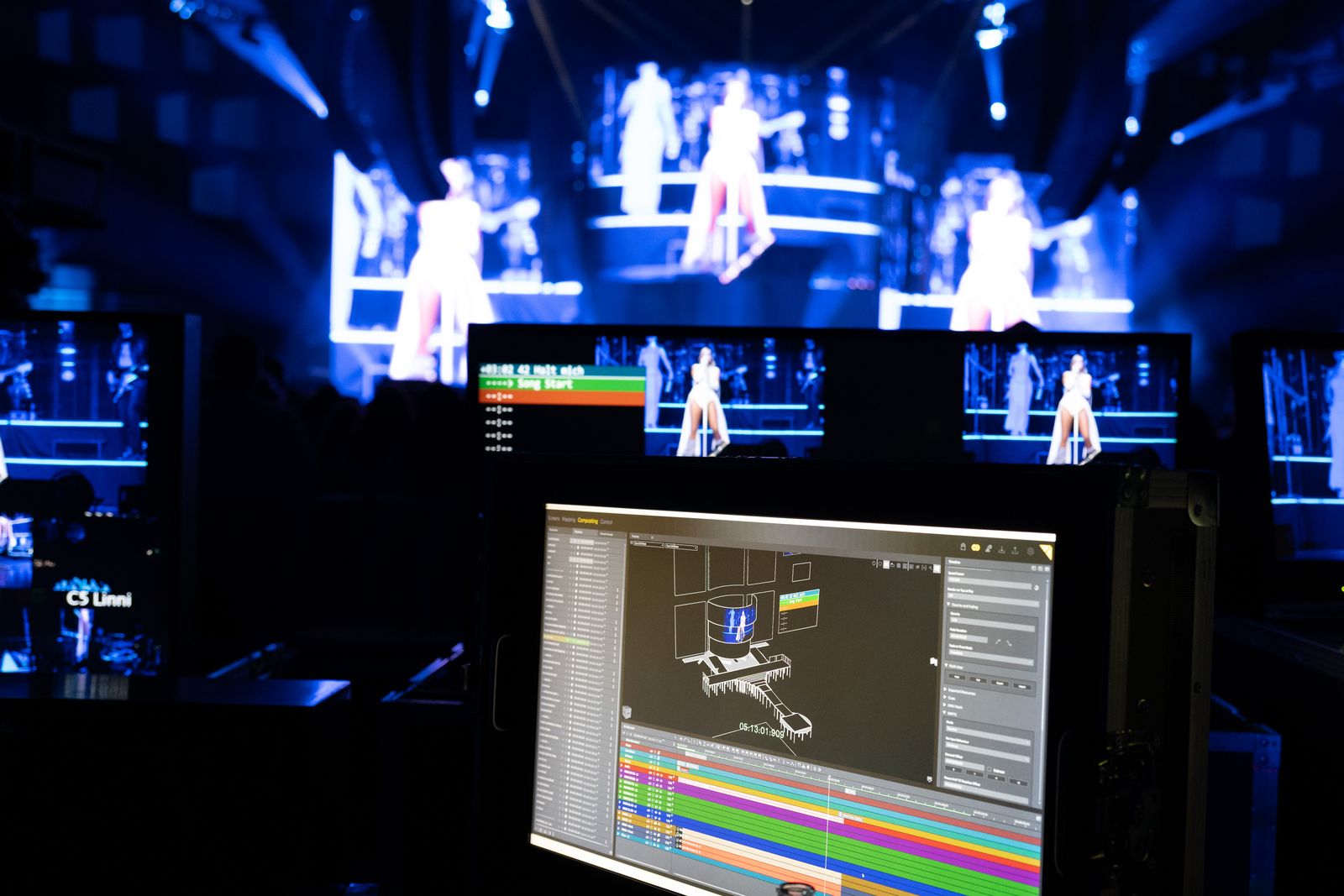
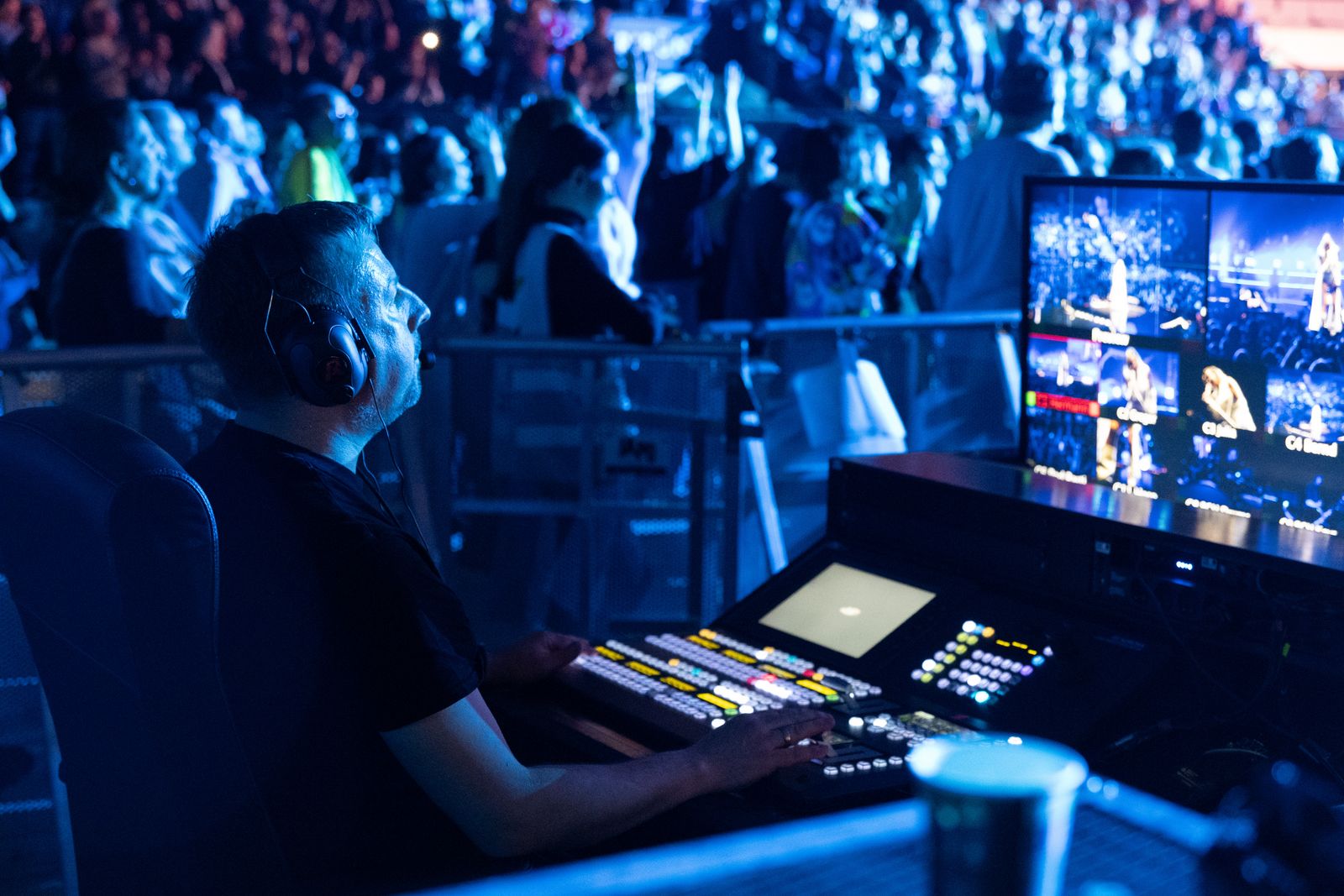
In Sarah Connor’s current tour production, live cameras, pre-produced content, and a dynamic LED architecture merge to create a seamless visual experience. At the heart of this complex video workflow is PIXERA. The media server system not only delivers content to approximately 514 square meters of LED displays, but also handles key tasks relating to control, communication, and collaboration.
Responsibility for the visual implementation lies with Thomas Krautscheid, who fulfills a dual role within the production. As Video Director, he designs the live camera feeds for the show, while as Media Server Programmer and Operator, he is responsible for content delivery and control using PIXERA. At the same time, Krautscheid also works as a developer at PIXERA.
“For me, this combination is especially exciting because experiences gained from production can be directly incorporated into software development,” explains Krautscheid. “Many requirements don’t arise at a desk but during rehearsals or day-to-day show operations.”
Krautscheid has been working with Sarah Connor for more than 15 years. His experience with live video and media servers dates back to the late 1990s, a time when digital media servers on the scale we see today were still almost unimaginable. Since then, his creative focus has remained on combining live camera footage with graphic content.
A Stage made up of Walls, Rings and an LED Floor
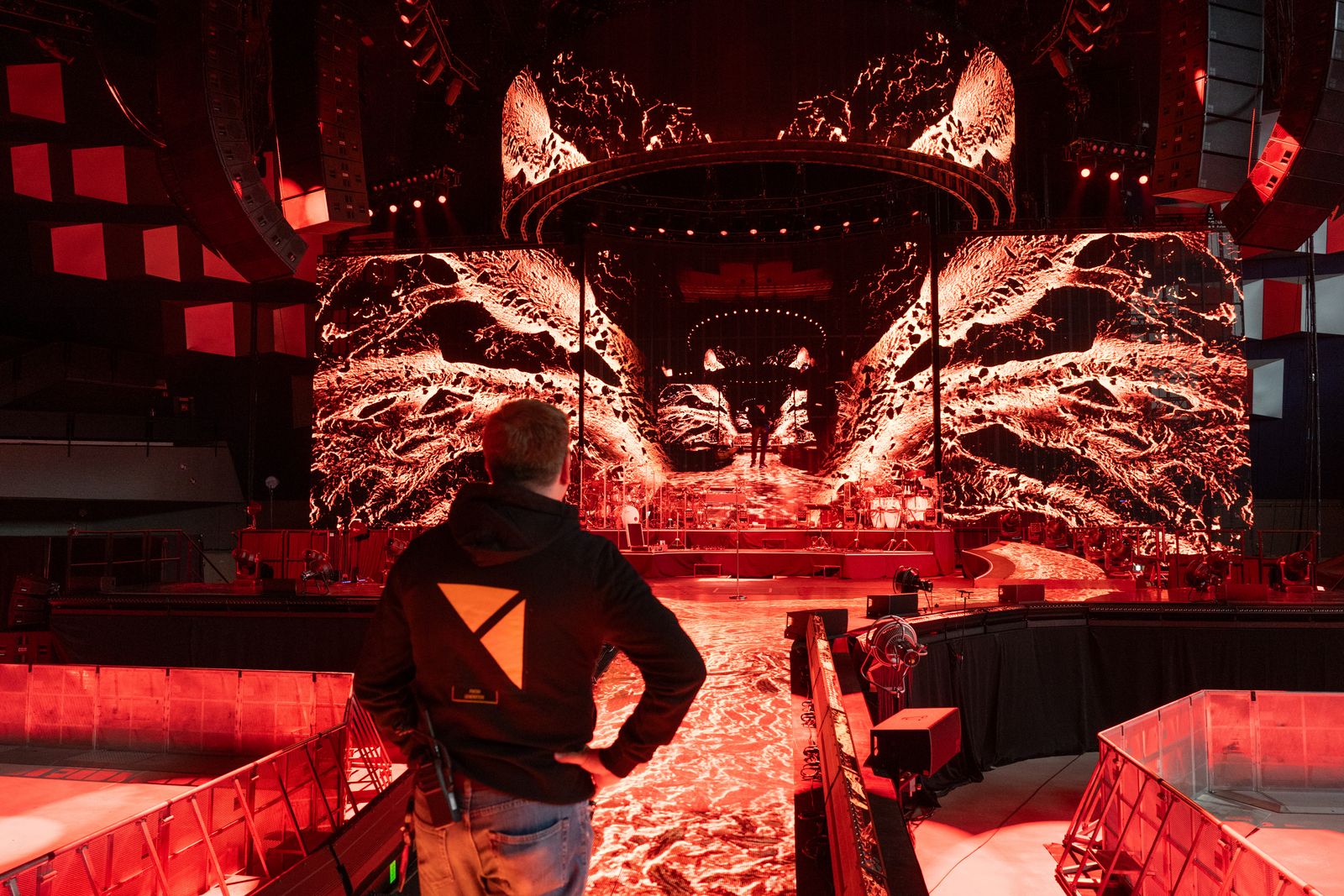
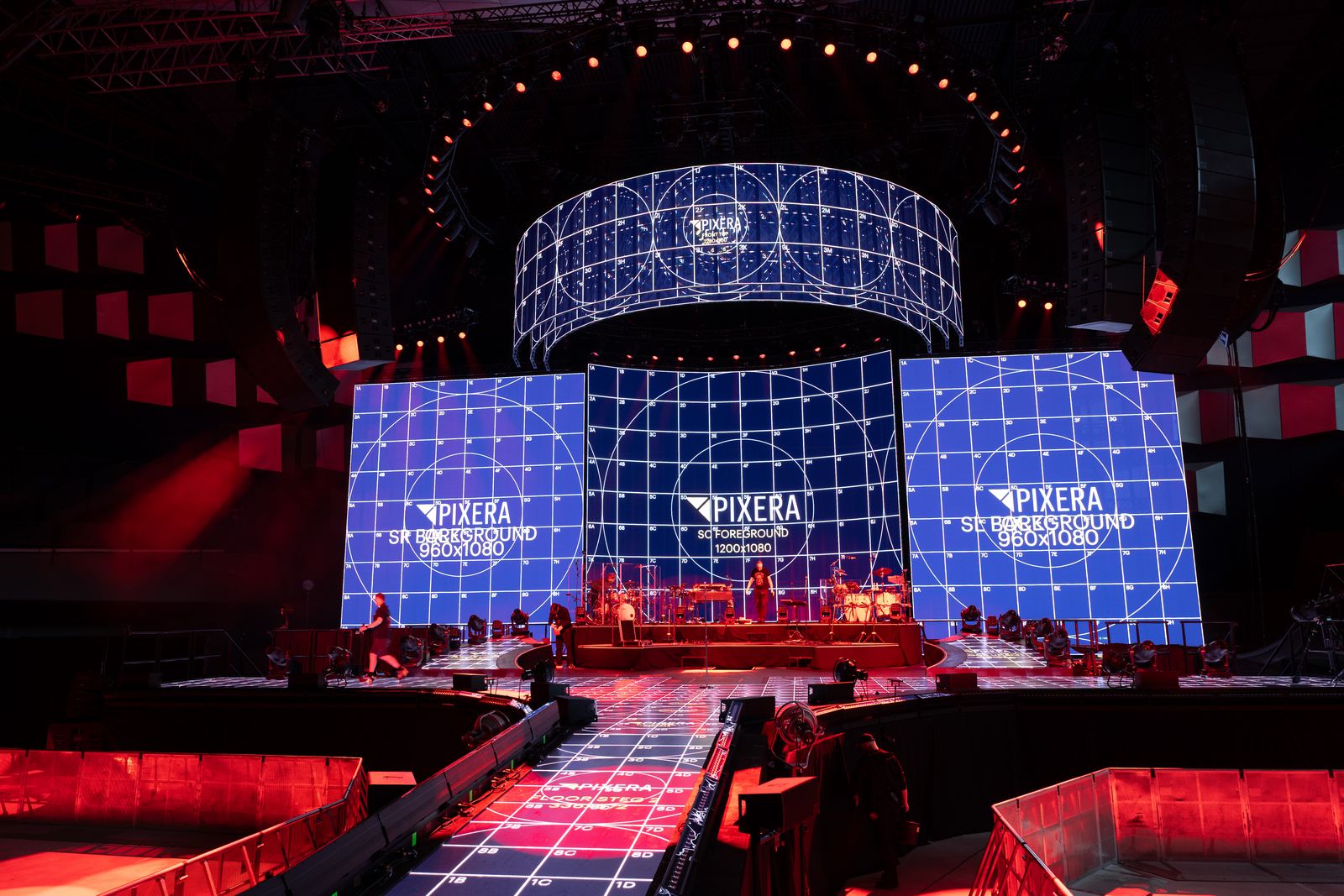
The stage set comprises around 240 square metres of LED walls, 144 square metres of movable LED rings and a 130-square-metre LED floor. The front LED elements are suspended from a C1 system and can adjust their height during the show. This allows not only the size but also the spatial depth of the stage design to be dynamically shaped.
The mobile stage floor is fully equipped with LED panels as well. It extends the visual themes of the walls into the auditorium and is additionally used during individual songs for elaborate camera compositions.
Low Latency for Live Cameras and Maximum Creative Flexibility
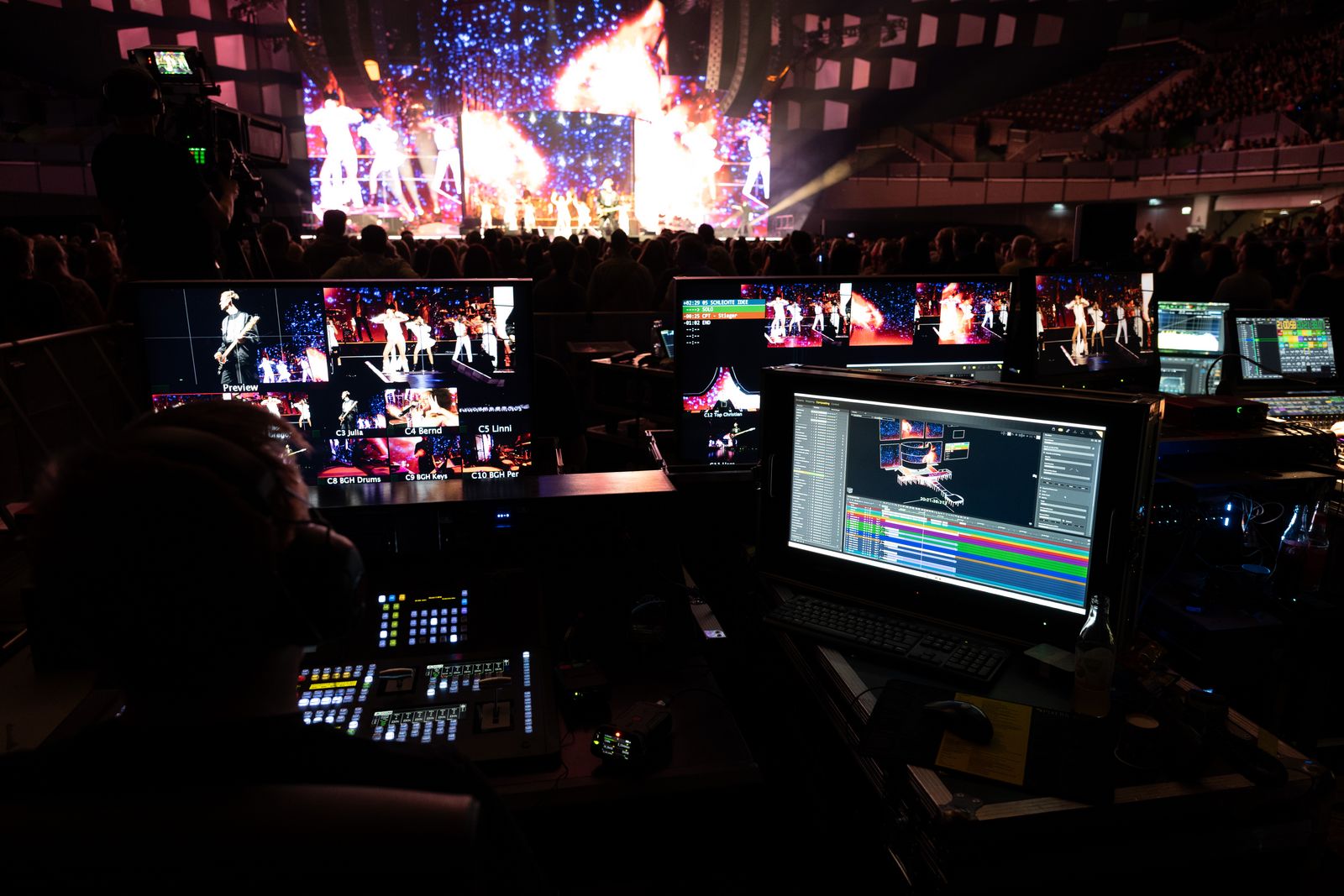
For Krautscheid, minimizing latency in live camera feeds is a top priority. For this reason, the central LED screens are fed directly from the Grass Valley K-Frame video switcher. PIXERA provides the content and graphic layers, while the live camera feeds are composited and processed within the video switcher.
“At a concert, movements on stage and on the video wall must be synchronised as closely as possible,” explains Krautscheid. “By processing the signals in the video mixer, we achieve very low latency without having to sacrifice the creative possibilities offered by the media server.”
For every screen element, PIXERA provides both a foreground and a background layer. The background forms the base, while the camera image superimposed on top. An additional PIXERA layer combines both elements into a single image composition. This top layer can, for example, contain a geometric mask, a graphic texture, or a complex additive composition. It is output including an alpha channel, so that transparent areas of the image can be processed directly in the video mixer.
“You can think of the setup as a sandwich,” explains Krautscheid. “PIXERA provides the background, the camera image lies on top of that, and another layer is added above everything to artistically tie it all together.”
A total of 13 separate video signals for the various LED screens leave the PIXERA server and are then processed further in the video mixer.
Automated Workflows with PIXERA Control
PIXERA does far more than simply play back media during production. Several custom-developed control modules link media servers, video mixers, cameras and lighting consoles together.
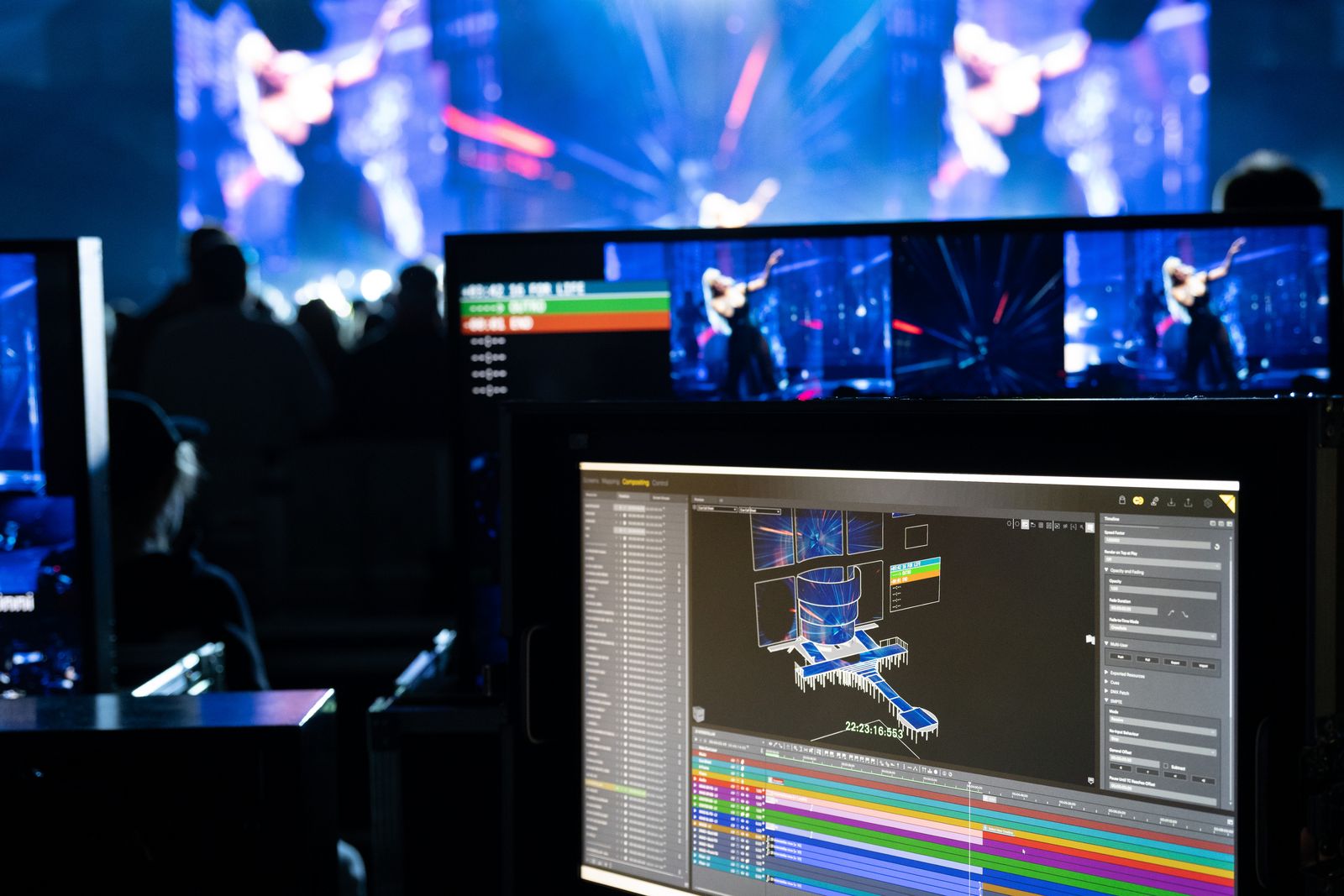
One key element is a digital cue call sheet for the camera crew. The camera operators see the information directly in their viewfinders, enabling them to know which musical sections and key moments in each song are coming up. The Control module developed by Krautscheid combines this display with PIXERA’s cue layers and CSV import function. This allows musical structures to be prepared quickly and, if necessary, supplemented whilst the timeline is running. Further modules enable bidirectional communication with the video mixer. PIXERA can control the mixer directly from the timeline; at the same time, PIXERA actions can be triggered directly from the mixer. The red-light control for cameras processed by the server also takes place automatically: as soon as a camera becomes visible within a timeline, it receives its tally signal.
“These processes happen entirely in the background,” says Krautscheid. “During programming and show operation, I no longer have to worry about every single technical detail.”
The depth of integration between the various systems becomes particularly evident in the so-called “Presenter Look.” When the operator selects the corresponding button on the video switcher, PIXERA automatically launches the appropriate timeline action and delivers the required background content. Simultaneously, PIXERA sends a command back to the switcher, ensuring that the correct keyer configuration and visual presets are recalled instantly.
Beyond this, individual show elements can be triggered directly from the lighting console, a crucial feature for segments performed without a click track or fixed timecode. This allows Krautscheid to remain fully focused on camera direction, while lighting designer Bertil Mark handles specific visual effects and cues.
A striking example occurs during the show's finale, when Sarah Connor interacts directly with the LED wall. By moving a fader on the lighting console, Mark triggers an animated energy ring that overlays the active content in real time, further blurring the line between live performance and media playback.
“Especially during sections that are not tied to a fixed timecode, it's incredibly helpful to distribute responsibilities across the team," explains Krautscheid. "I can focus entirely on the cameras while effects are triggered from the lighting console at precisely the right musical moment.”
Most of the show runs on timecode. During rehearsals, songs were repeatedly shortened, extended, or structurally modified. Such adjustments can quickly introduce unwanted jumps or complex timing offsets within a large show timeline. Using Hot Regions in PIXERA, Krautscheid was able to accommodate these changes immediately. Existing programming could be adapted to new song structures without rebuilding large portions of the timeline.
Intelligent Camera Distribution on the LED Floor
In some songs, up to ten camera feeds appear simultaneously on the LED floor. To achieve this, the team relies on automated source substitution within the video switcher.
For example, if the camera crane is selected for the rear LED walls, a different camera is automatically displayed on the floor. This prevents the crane from filming itself or revealing its own position within the stage design. The appropriate source is substituted automatically without requiring additional intervention from the Video Director during the show.
The central video infrastructure is housed in a specially designed touring dolly. Together with Christian Heinzel (Fifty Frames) and his team, high-end broadcast equipment was integrated into a touring-ready system capable of withstanding the rigors of daily operation on the road.
The setup includes Grass Valley cameras, a Grass Valley K-Frame switcher, and an extensive Riedel MediorNet infrastructure. The PIXERA systems are based on custom-configured hardware and operate via a dedicated dongle solution.
To keep visible technology on stage to a minimum, much of the technical infrastructure is installed beneath the stage. Crew members working there receive dedicated multiviewer feeds from video control, allowing them to follow the camera feeds and show actions relevant to their specific responsibilities.
In addition to the live production itself, all 13 camera feeds are recorded as independent signals. This enables the team to create social media content during the tour, often overnight, while also building an archive for future productions and additional post-production use.
The entire production travels with 16 semi-trailers, making efficient setup and teardown at every venue essential. Reliable workflows and deep integration between all systems are therefore critical.
Multiuser Workflows and Remote Collaboration with PIXERA
Beyond the stage environment, PIXERA also supports distributed collaboration across the production team.
Between rehearsals and the start of the tour, Krautscheid and Lighting Designer Bertil Mark worked simultaneously on the show from different locations via VPN. Changes made to PIXERA programming became immediately visible within the visualization environment. The platform’s multiuser capabilities allowed both users to work on the same project in parallel without manually exchanging show files.
Content delivery was also managed remotely. Content Designer Julien Rigal rendered updated media directly into a Nextcloud instance monitored by PIXERA. New versions were automatically detected and updated across all three locations.
“Content versioning saved us a tremendous amount of work during this phase,” says Krautscheid. “As soon as a new version was available, PIXERA could integrate it automatically. I didn’t need to manually replace anything on the workstation.”
For Krautscheid, PIXERA’s greatest strength lies in its adaptability to different production environments. Built-in features can be expanded through custom Control modules, while open interfaces facilitate communication with switchers, lighting consoles, cameras, and additional systems.
“PIXERA helps us implement even highly complex show setups in a structured and reliable way,” summarizes Krautscheid. “If a required function isn’t available out of the box, it can often be realized through a Control module. At the same time, the system is stable enough for us to rely on it every day during show operation.”
His dual role as software developer and production professional creates a direct link between software development and live production. Experiences gathered on tour can be incorporated into future features and improvements.
“PIXERA is a tool that adapts flexibly to very different situations, whether you’re programming in a studio or touring with a large-scale production. Many ideas emerge during daily use and eventually find their way back into the software.”
Credits
Stage & Show Design: Gunter Hecker
Lighting Design & Creative Direction: Bertil Mark
Video Director & PIXERA Programmer: Thomas Krautscheid
Content Design: Julien Rigal
Video Equipment: Christian Heinzel / Fifty Frames
LED Equipment: Screenvision
Production Manager: Jan Kleinenbrands
Promoter: Semmel Concerts